Blog / Gear
The home gym that covers everything, for under two hundred dollars
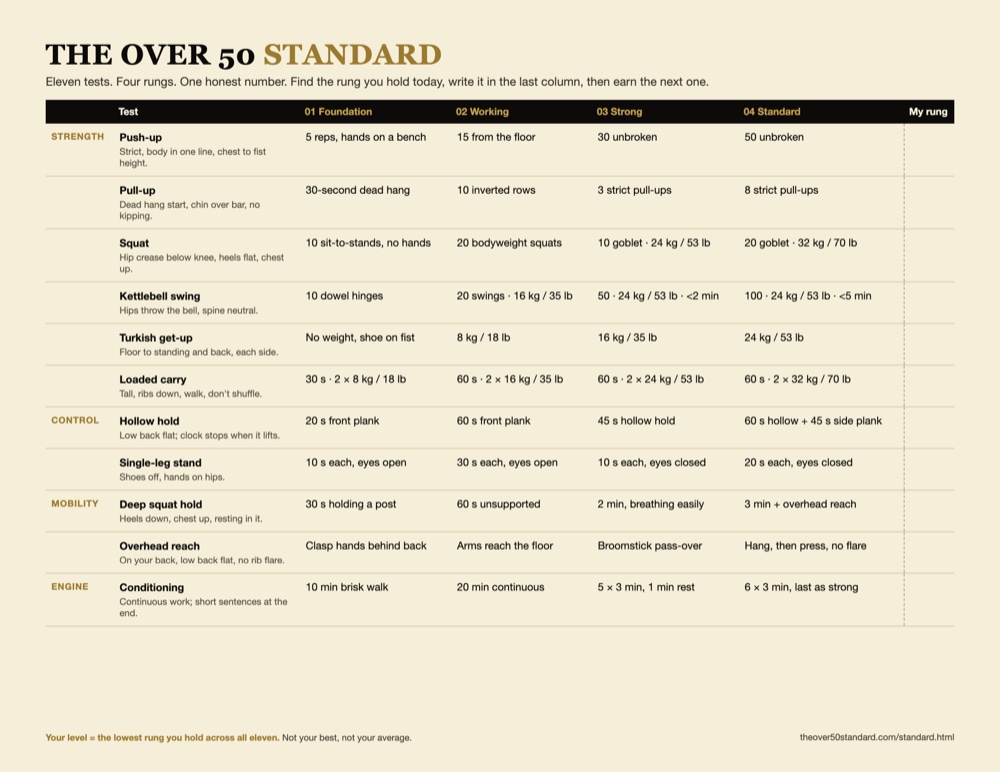
Nine of the eleven tests need nothing but a floor. This is the equipment for the other two, and for the joints that have been carrying you around for five decades. Bought in this order, it comes in under two hundred dollars.
One: something to hang from
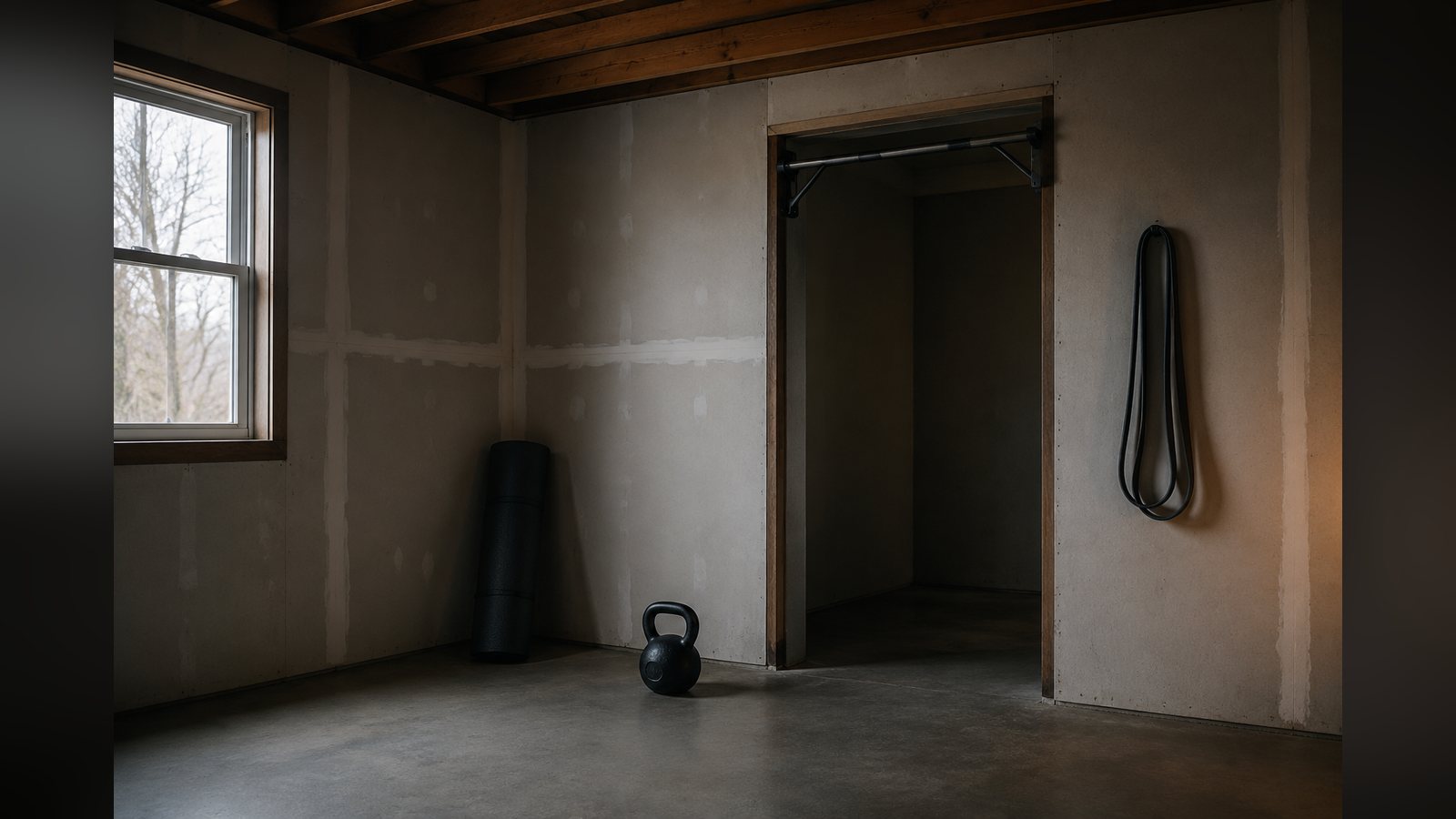
A doorway pull-up bar is the highest-value purchase on this list and usually the cheapest. It buys you two tests at once: the pull-up, and the dead hang that is the Foundation rung underneath it.
The dead hang alone is worth the money. Thirty seconds hanging, three times a week, builds the grip that fails first in the loaded carry and improves the overhead mobility that the reach test measures. One purchase, three tests touched.
Buy the kind that hooks over the frame and braces against it, rather than the telescopic kind that tensions inside the doorway, if your frame allows. Check the frame is solid before the first hang, not after.
Two: one kettlebell
Sixteen kilos for most men, twelve if you are coming back from a long layoff. One bell covers the swing, the get-up and the loaded carry, which is three more of the eleven.
This is the single item on the list that will still be in your house in thirty years. Cast iron does not wear out, go out of date, or need a subscription.
Three: a mat worth lying on
The hollow hold and the deep squat hold both happen on the floor. A thin yoga mat punishes the tailbone and the knees, and that is why people quit floor work.
Six millimetres is the floor, not the ceiling. Anything thinner and you will find reasons not to do the two tests that need it.
Four: bands, then joints
A set of loop bands is what turns the pull-up from a test you fail into a movement you can practise. Loop one over the bar, put a foot in, and the rep becomes trainable.
Then joint insurance, which is the part men over fifty skip and should not. Wrist wraps for push-up volume, elbow sleeves for pull-up volume. Together they cost less than one physiotherapy appointment and they are the difference between training for ten weeks uninterrupted and training for three.
What to skip
A bench. Nothing in the standard needs one, and it takes up more room than everything else combined.
Adjustable dumbbells, at first. They are genuinely useful and they are an upgrade, not a foundation. Buy them when the bell stops being enough.
Anything with a screen or a subscription. The eleven tests are the programme, and none of them need to be counted for you.
A power rack, a smith machine, a cable tower. All excellent, none of them necessary, all of them a way of spending money instead of training.
The running total
The four purchases above land between one hundred and fifty and two hundred dollars depending on brands and where you shop. That covers all eleven tests with nothing missing.
Everything else on the full gear list is an upgrade to something you already own, and none of it will move your score faster than using what is in this list.