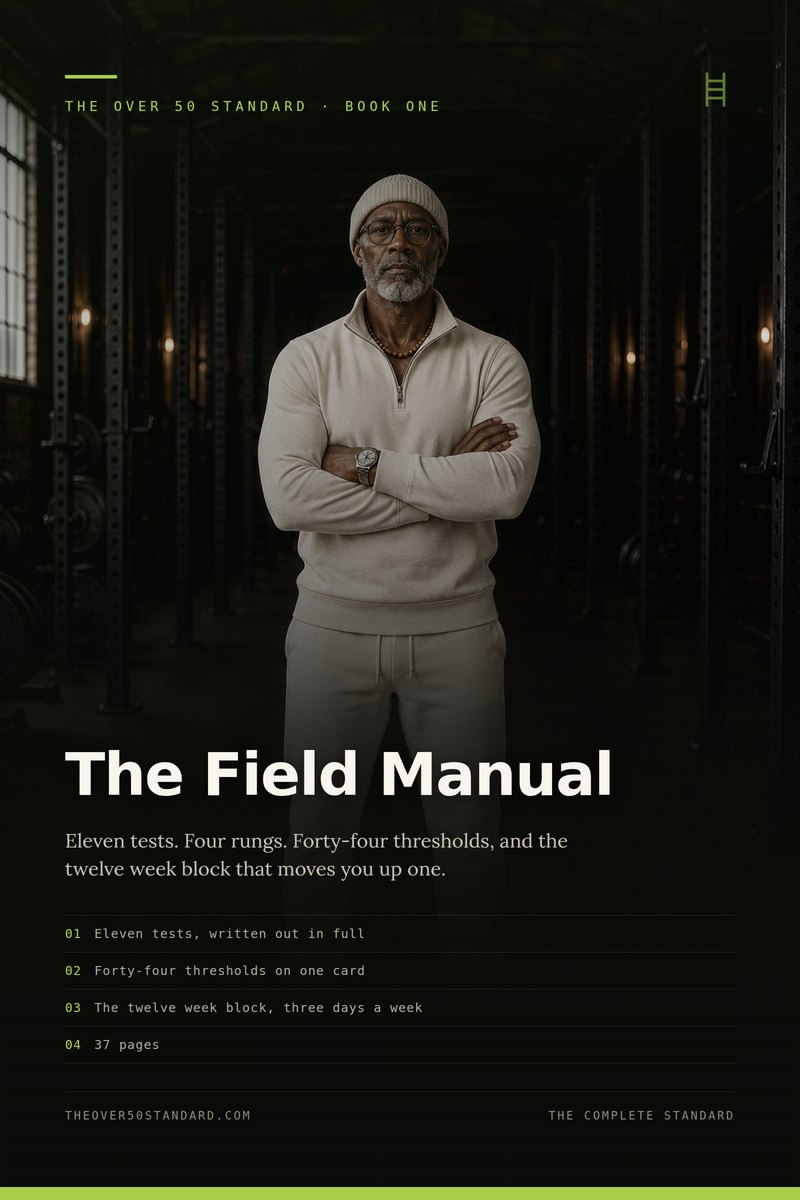
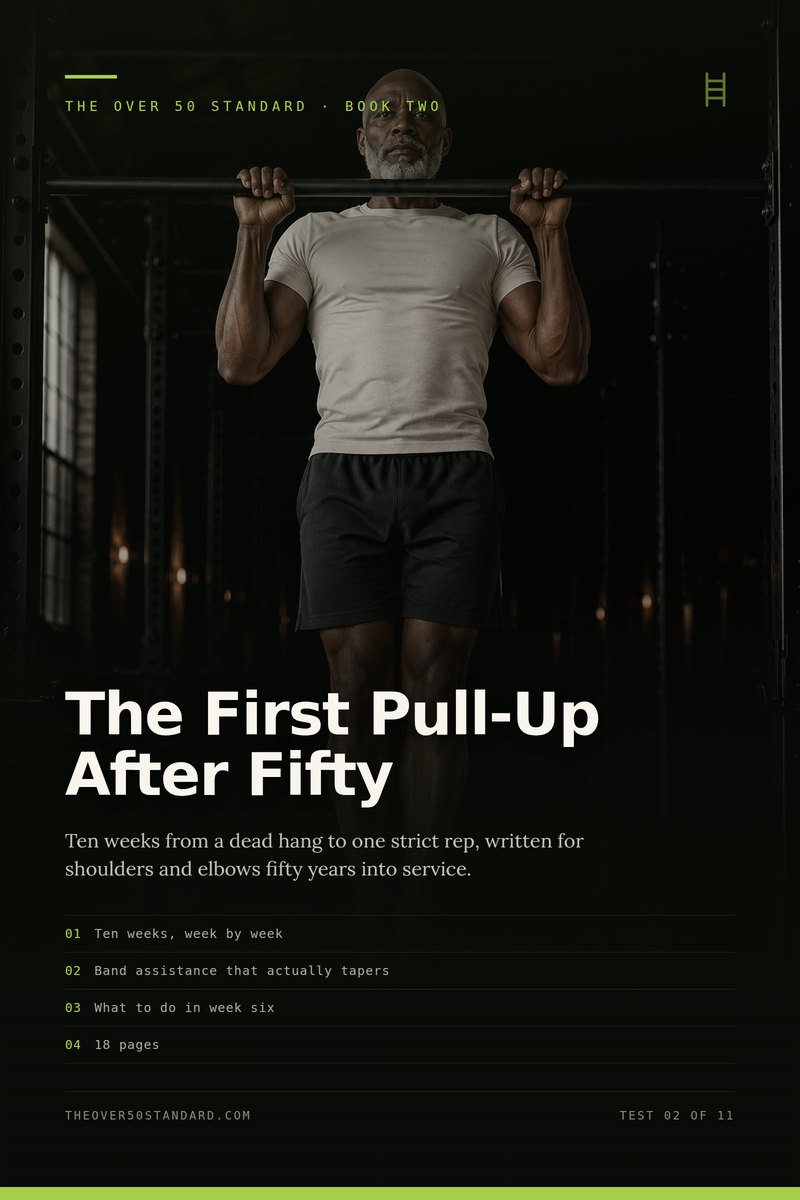
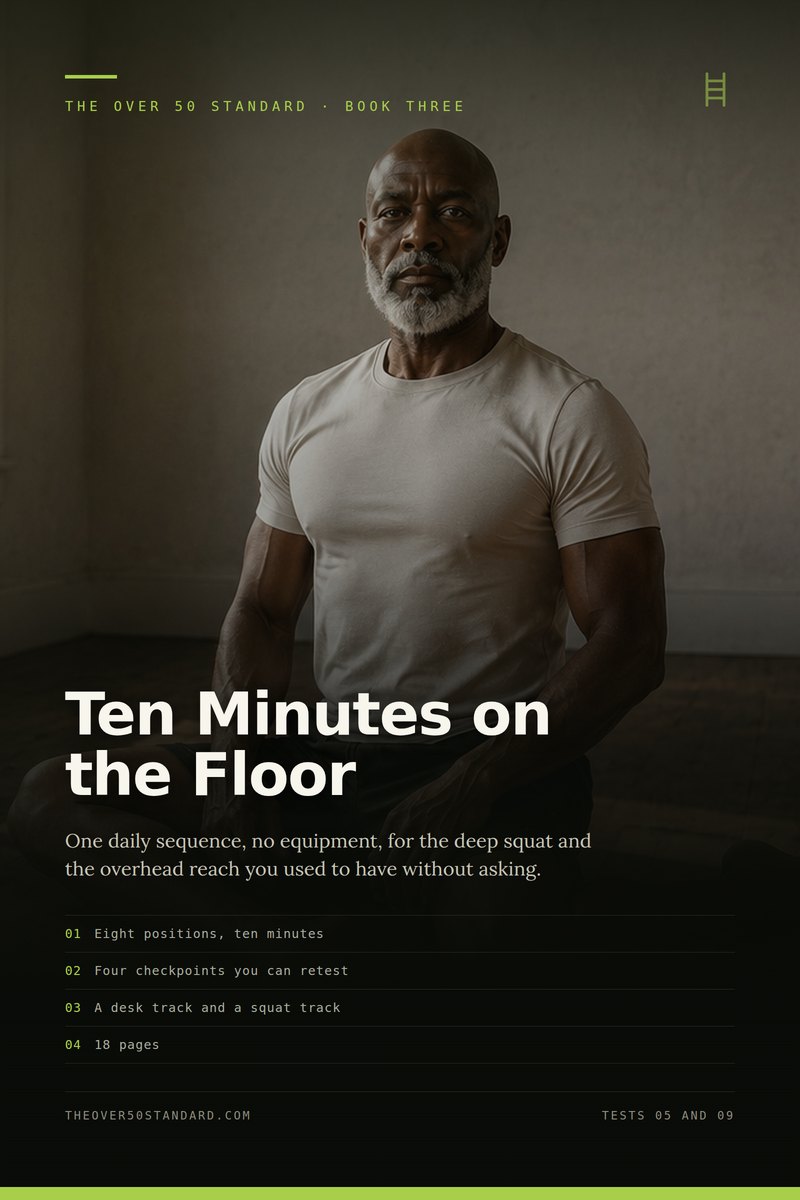
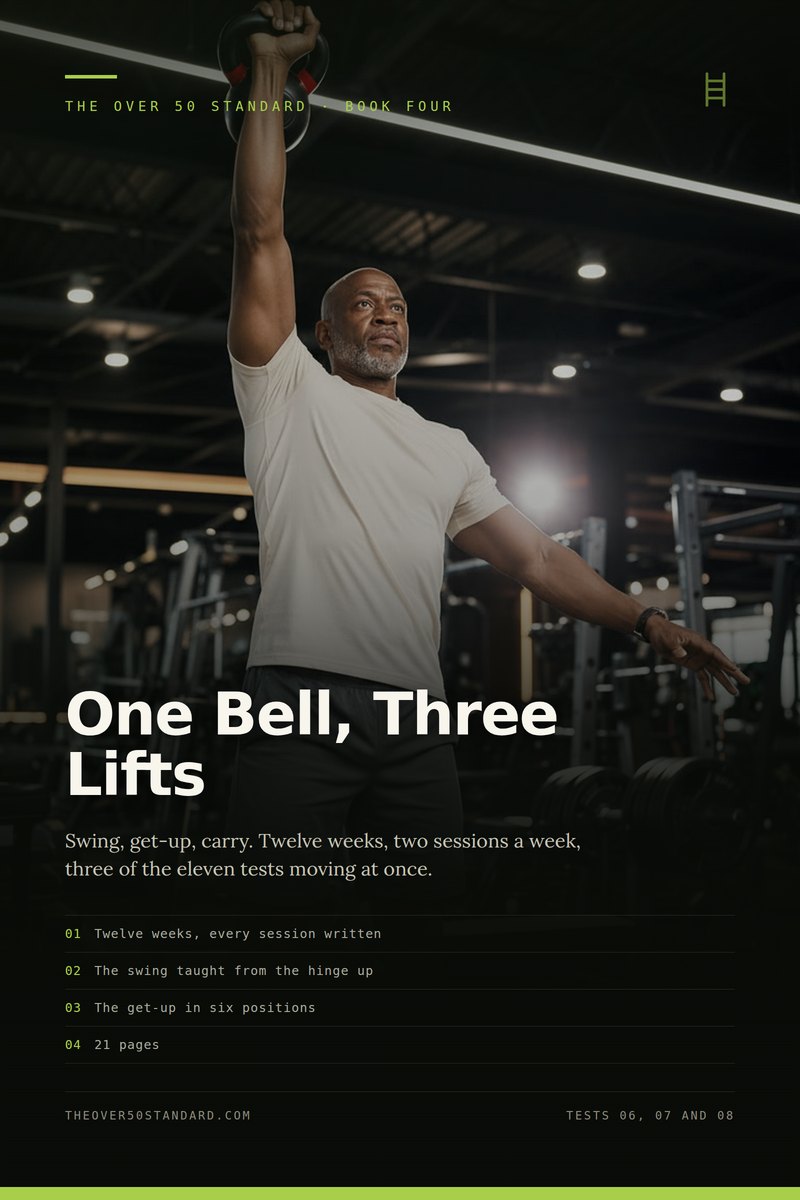
Books / No. 06
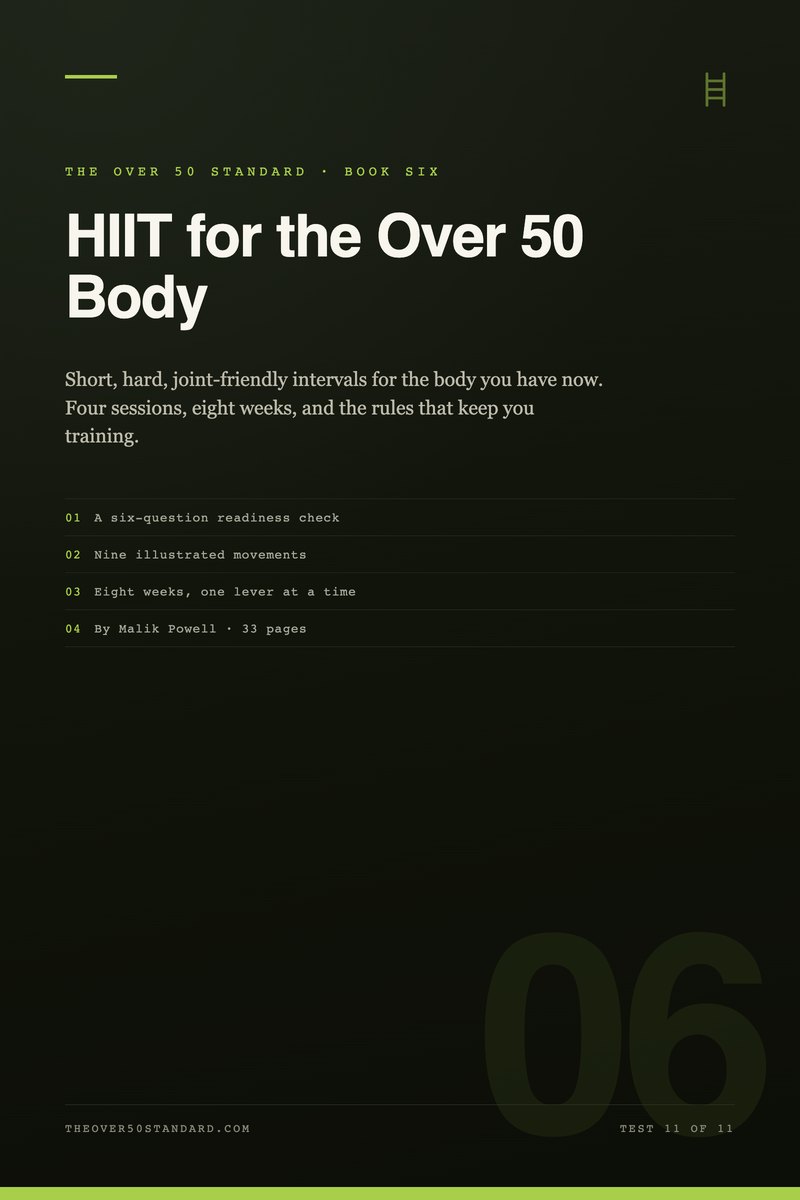
Hard intervals, built for the body you have now.
Most men over fifty either quit hard training or keep doing it the way they did at thirty until something breaks. This is the third way: short, hard, joint-friendly intervals, with the guardrails that keep them from costing you a knee.
$17
New · 33 pages · PDF · by Malik Powell
- A six-question readiness check before you start, and a thirty-second green, amber, red check before every session
- Nine movements, each illustrated, with what to do and how it goes wrong
- Four sessions written out in full, from a 16-minute bad-week minimum to a 31-minute conditioning day
- An eight-week progression that moves one lever at a time
- What to do when something hurts, how to adapt for common health conditions, and coming back after a layoff
- Safety guidance grounded in US public-health sources, listed at the back
Get told when it lands All six books
Not on sale yet. The first hundred readers of each book get it at half the price above, and the list below is how you hear about it in time. One email when it is ready, and nothing else.
What is in it
12 chapters, 33 pages.
- 01Read this firstWho it is for, and the one sequence you should not skip
- 02Why intensity still belongsWhat HIIT is, what it is not, and the two wrong turns
- 03The cost of getting it wrongWhat changes after fifty, and what it costs to ignore it
- 04Four pillars, in orderMove, strengthen, function, sustain, and where intensity sits
- 05The readiness checkSix questions, ten minutes, before any hard interval
- 06Joint-friendly intensityFour dials, and the work-to-rest ratios that fit a real body
- 07The movementsNine illustrated exercises, how to do them, and how they go wrong
- 08The four sessionsWarm-up, the sessions, and how to rotate them
- 09Eight weeksThe progression, week by week, and the weekly compass
- 10Recovery and setbacksWarning signs, when something hurts, comebacks, bad weeks
- 11For the decades aheadMeasuring what matters, and training around your life
- 12The card, the log and the sourcesThe plan on one page, a log to print, and where the guidance comes from
A page from it
How it reads.
From Chapter Two
HIIT is a structure, not a punishment. You work harder than you could sustain, for a short period, and then you rest. Then you do it again.
A sixty-two-year-old doing a hard two minutes on a stationary bike against resistance is doing HIIT. So is a twenty-eight-year-old sprinting on a track. Same structure, different body.
HIIT for the Over 50 Body, Chapter TwoHonestly
Who this is for.
You want your engine back, and the conditioning test is the one holding your score down
You have been hurt by a bootcamp or a workout built for a thirty year old, and you want hard training on different terms
You have quietly stopped training hard at all, and you suspect that is costing you more than it is saving
And who it is not for.
You have a heart condition or uncontrolled blood pressure and have not spoken to your doctor. Do that first, and the book says so on page two
You want a thirty-day transformation. This is eight weeks to start, and a way of training for decades after that
What it needs
The kit this book uses.
Links go to Amazon and a purchase through one pays me a small commission at no extra cost to you. It does not change what gets recommended.
Where this shows up
The free pages behind it.
Before you ask
Four questions.
Is HIIT safe after fifty?
Done the way this book sets it up, for most people yes. It starts at thirty seconds of work to ninety of rest, uses low-impact tools like a bike, a hill and a pair of dumbbells, and puts a six-question readiness check in front of the first hard interval. If you have a heart condition, high blood pressure or a joint you are already managing, talk to your doctor first. The book says so on the first page.
Do I need a gym?
No. Every session runs on a stationary bike, a hill or a treadmill incline, and a pair of dumbbells or a kettlebell. The minimum-dose session needs ten minutes and nothing else.
How is this different from the conditioning test page?
The test tells you which rung you are on. The book is the eight weeks that move you up one: the sessions, the progression, the weekly push, hold or pull-back check, and what to do when something hurts.
Who wrote it?
Malik Powell, who writes The Over 50 Standard. He is not a doctor, physiotherapist or certified coach, and the book does not pretend otherwise. What it gives you is structure and guardrails.
The list
Half price for the first hundred.
HIIT for the Over 50 Body is in production. Put your address in and you will know the day it lands, at the launch price. One email per book, and nothing else the list is ever used for.