Blog / Gear
What size kettlebell should a man over fifty start with?
Short answer: sixteen kilos, or thirty-five pounds. Twelve if you are coming back from a long layoff or a back that has given you trouble. Almost nobody needs three bells, and almost everybody buys the wrong one first.
Why sixteen kilos, and not eight
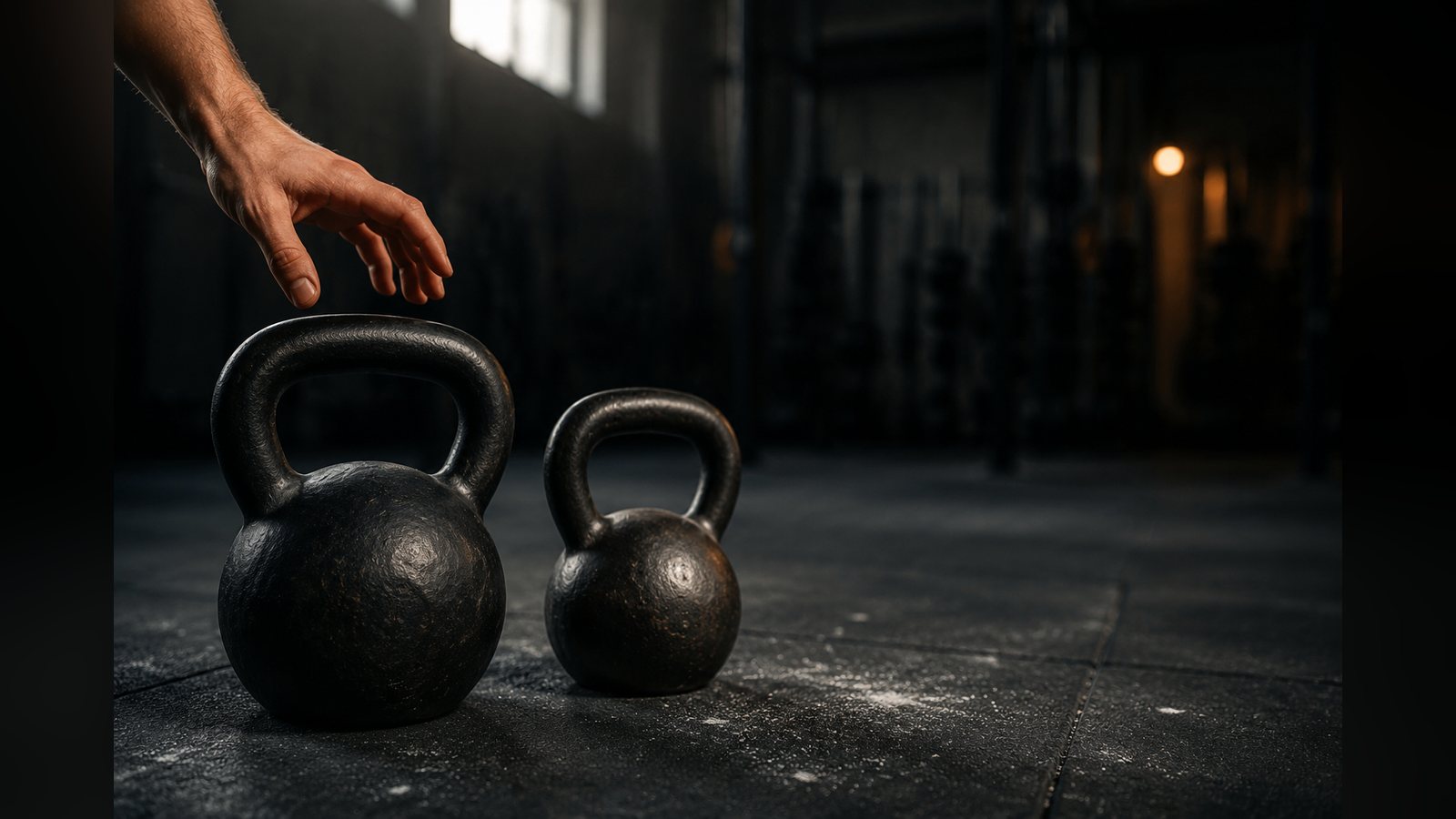
The mistake that costs the most money is buying too light. A kettlebell is not a dumbbell, and the swing is not a curl. The swing is a hip movement, and hips are strong even in men who have not trained in years. An eight kilo bell is too light to teach you anything about the hinge, because you can muscle it up with your arms and never notice you are doing it wrong.
Sixteen kilos is heavy enough that the arms give up and the hips have to take over. That is the entire lesson of the swing, and a lighter bell hides it from you.
The other direction is real too. Twenty-four kilos is the classic recommendation for men, and it is too much for a first bell if you have not hinged under load before. You will learn the movement badly and your lower back will pay the tuition.
When twelve is the right call
Take twelve kilos instead of sixteen if any of these are true. You have been away from training for more than five years. You have a lower back that has flared up before and you know what triggers it. You cannot yet do ten hinges with a broomstick on your back while keeping the head, mid-back and tailbone in contact.
That last one is the real gate, and it is the Foundation rung of the swing test for a reason. If the pattern is not there, no weight is the right weight yet.
Why one bell is enough for a long time
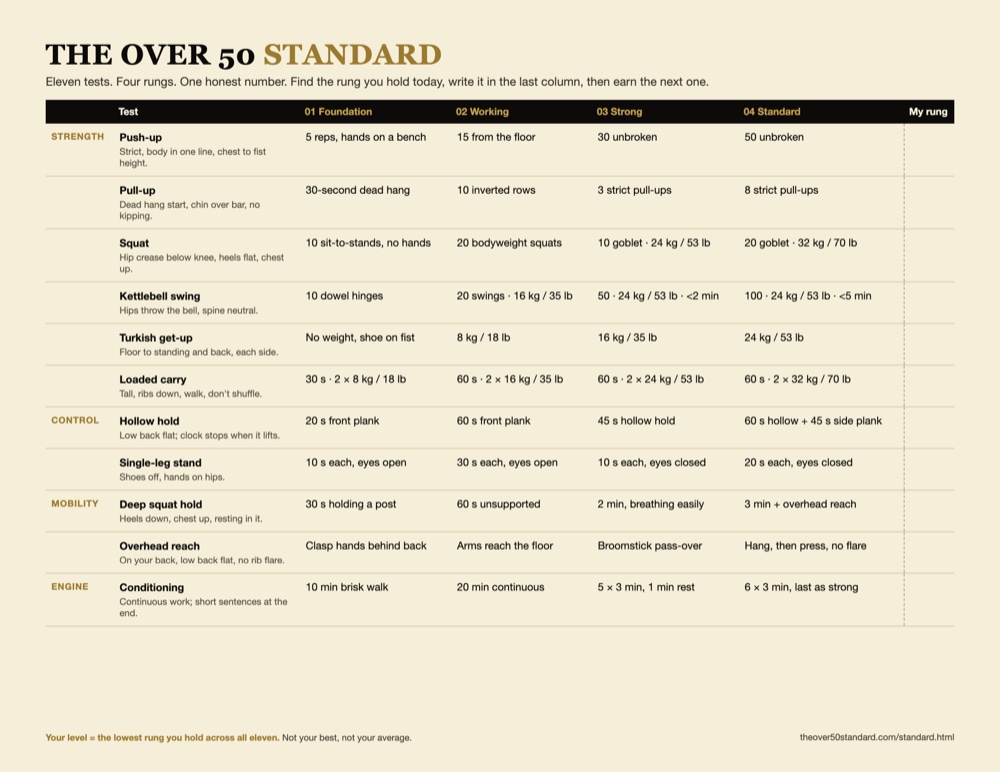
Three of the eleven tests in this standard run on a single kettlebell: the swing, the Turkish get-up and the loaded carry. One bell trains all three, and the progression is time and reps rather than more iron.
A sixteen kilo bell takes you from twenty swings to a hundred swings, from a shoe balanced on your fist to a full get-up each side, and from thirty seconds of carry to sixty. That is a year of work in one piece of equipment that will outlive you.
The second bell earns its place when a hundred swings at sixteen stops being hard and the get-up is clean on both sides. That is a genuinely good problem and it is usually a long way off.
Cast iron or competition, coated or bare
Buy cast iron. Competition bells are a uniform size regardless of weight, which matters if you compete and does not matter to you.
A powder or vinyl coating is kinder to floors and to hands. Bare cast iron chews up calluses faster and is fine if you train in a garage. Neither one changes what the bell does.
The handle matters more than the finish. It should be wide enough for two hands with room to spare and smooth enough that it does not tear. Run a thumb along the inside of the handle for casting seams before the first swing, and file any you find.
The order to buy things in
If the kettlebell is the first piece of equipment you own, it is a good first piece. Nine of the eleven tests need nothing but a floor, so a bell and a bar to hang from cover the whole standard between them.
What not to buy first: adjustable dumbbells, a bench, a rack, anything with a screen. All of it is upgrade equipment, and none of it moves your score on this standard faster than the bell you already have.