Blog / Strength
Grip strength, and why it is worth taking seriously
Grip is the cheapest thing on this list to train and one of the most closely watched markers of how people age. It is also the ceiling on two of the eleven tests, which means training it raises your score twice.
Why grip gets watched
Grip strength is easy to measure, hard to fake, and tracks with a lot of other things researchers care about. That is why it turns up so often as a marker in studies of ageing.
The useful part for you is not the research. It is that grip is trainable at any age, it responds fast, and almost nobody trains it deliberately.
It is the ceiling on two tests
The loaded carry ends when the hands give out, not when the legs do. Watch anybody attempt it and the failure is always the same: the bells slip, long before the posture goes.
The dead hang is the Foundation rung of the pull-up test and it is pure grip. Men who cannot hold thirty seconds are not weak in the back, they are weak in the hands, and they conclude they cannot do pull-ups.
Fix the grip and both tests move without training either of them directly.
Three ways to train it, in order of value
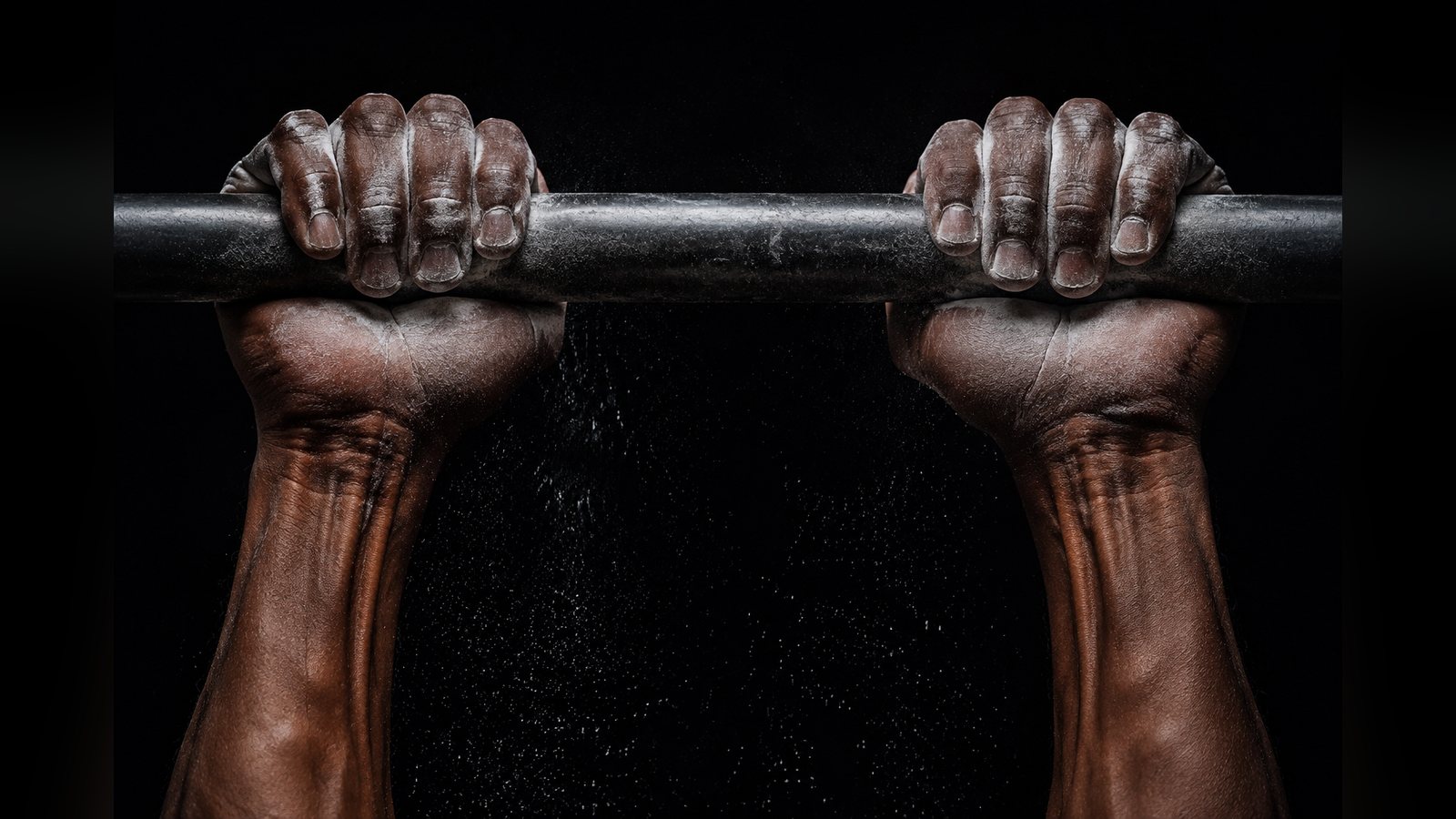
Hang from something. Thirty seconds, three times, three days a week. It trains grip and overhead mobility at once and needs nothing but a bar.
Carry something heavy. Two bells, sixty seconds, walking normally. This is the loaded carry test and it is also the best grip training there is, because it loads the hands in the position they actually fail in.
A hand gripper, five minutes while the coffee brews. Least specific of the three, easiest to actually do daily, and it works.
What not to bother with
Straps. They let you lift more today by removing the thing you are trying to build. Fine for a heavy pull once the grip work is done, useless as a habit.
Grip gadgets with springs and dials that promise crushing power. The hand gripper is fine and cheap. Anything more elaborate is a way of spending money instead of hanging from a bar.
Chalk is the exception. Chalk is not a substitute for grip, it removes a variable that has nothing to do with strength, and liquid chalk does not make a mess of the house.
How fast it moves
Grip responds faster than almost anything else in the standard. Four weeks of hangs and carries usually adds meaningful time to both, which makes it a good place to start when a comeback needs an early win.
It also gives out first when you are underslept or underfed, which makes it a useful daily readout. A hang that is fifteen seconds shorter than usual is information about your week, not about your training.