Blog / Strength
What a daily dead hang actually does
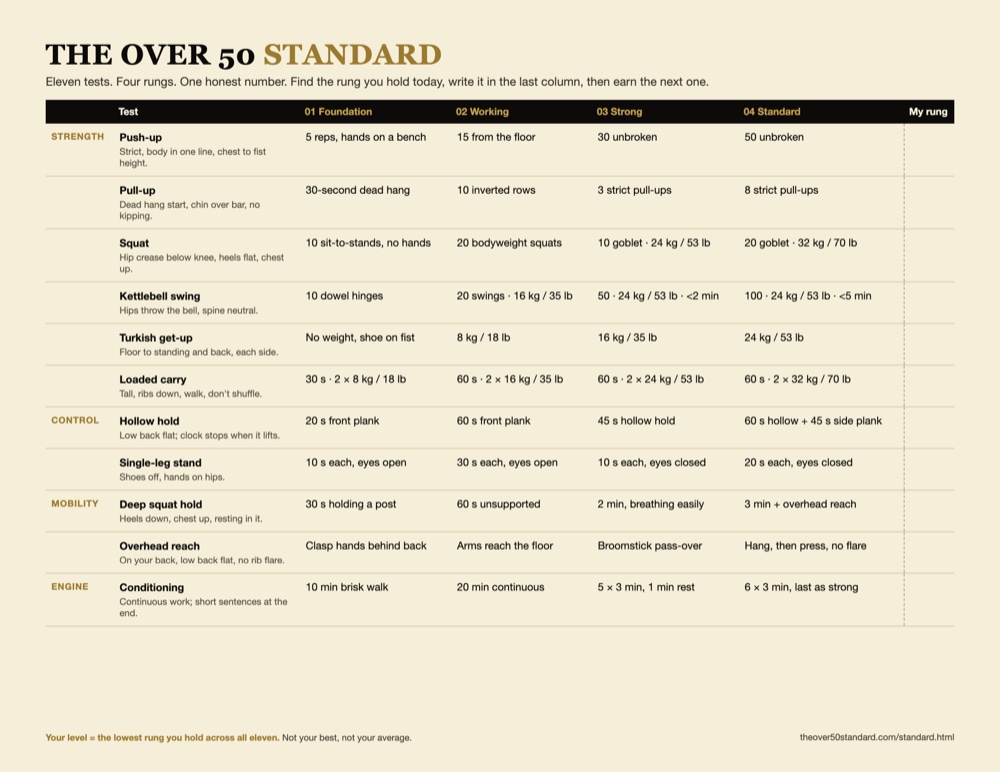
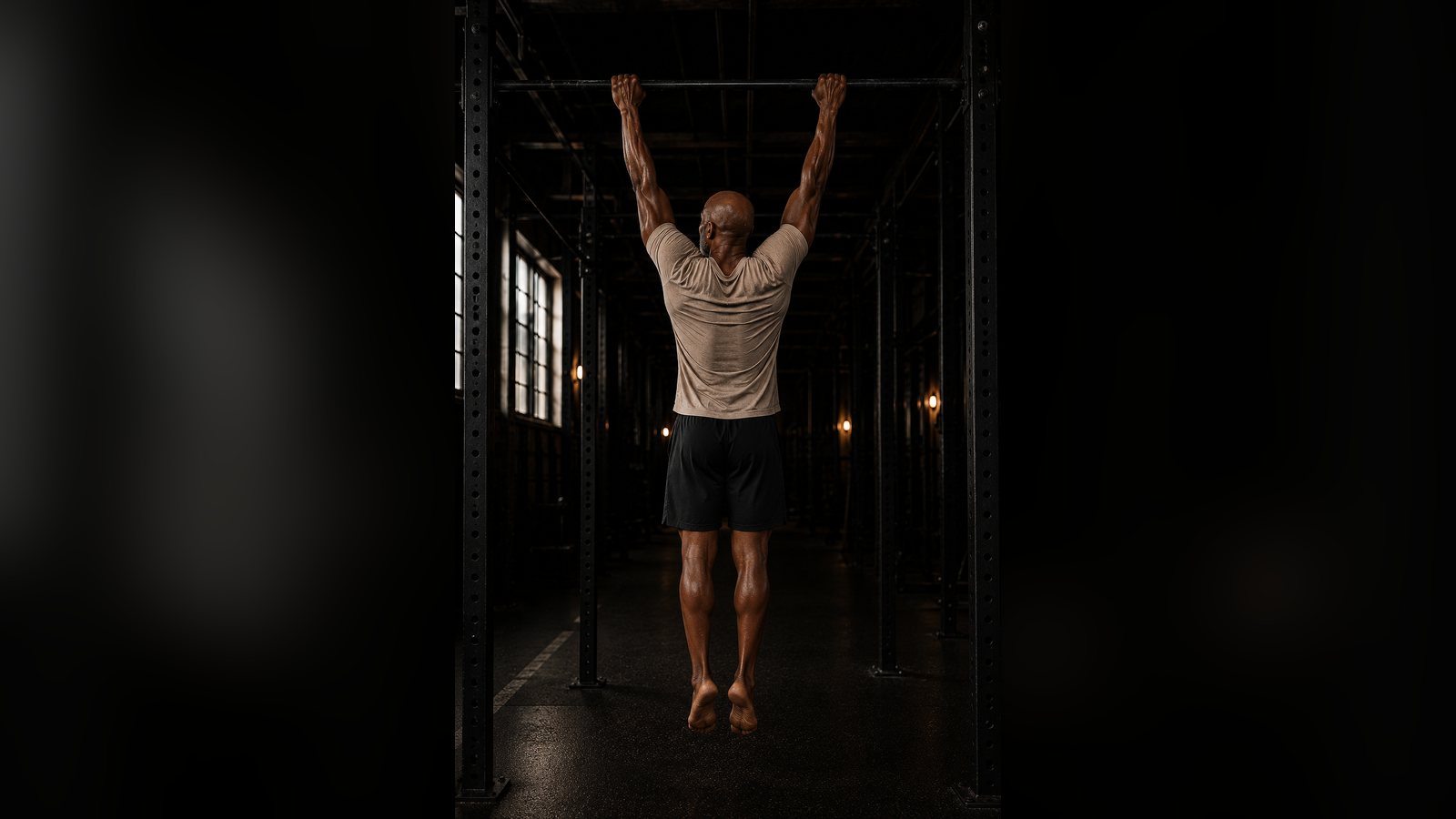
Hanging from a bar is the cheapest thing on this whole standard. It trains grip, it loads the shoulder in the position most men have stopped using, and it happens to be the Foundation rung of two separate tests at once.
Three things at the same time
Grip. It is the first quality to go after fifty and the slowest to come back, and it is the ceiling on the loaded carry test for most men. Hanging trains it under exactly the conditions it fails in.
Overhead range. A dead hang is overhead mobility under load, which is why it sits in the Standard rung of the overhead reach test. Nothing else on the list asks a shoulder to hold a loaded end range for thirty seconds.
The pull-up. Thirty seconds hanging is the Foundation rung of the pull-up test and it is the honest gate before pull-up work starts. Nothing else moves until this does.
How to start if you cannot hold ten seconds
Keep your feet on something. A chair, a box, a stair, taking whatever weight you need. The job is time on the bar rather than proving anything, and a supported hang trains the same tissue.
Three holds, three times a week, to a time you can finish rather than a time you fail at. Add five seconds a week. Most people go from ten seconds to thirty in about six weeks and are surprised by how quickly it moves once it starts.
The grip that lasts longest
Full grip with the thumb wrapped around the bar, not hooked over the top. A thumbless grip feels easier at first and gives out sooner.
Keep the grip in the fingers rather than deep in the palm. Skin bunched in the middle of the palm is where torn calluses come from, and a torn hand costs you two weeks of nothing.
Shoulders active rather than fully collapsed. You are not shrugging, and you are not hanging like a coat on a hook either. Somewhere between, with a sense that the shoulder is holding its own position.
How much, how often
Three holds of thirty seconds, three days a week, is enough to move both tests. It fits into any session and it does not interfere with anything else.
Daily is fine too, and plenty of people do it while the kettle boils. Watch the hands rather than the shoulders: skin gives out before tissue does at this dose.
When to stop
A shoulder that hurts at rest is a different problem from the one hanging solves, and daily hanging will make it worse rather than better. Get it looked at, and come back afterwards.
Pins and needles down an arm, or a hand going numb, is a nerve rather than a muscle, and it is a reason to come off the bar and mention it to somebody rather than to hold on longer.