Blog / Control
How to improve your balance after fifty
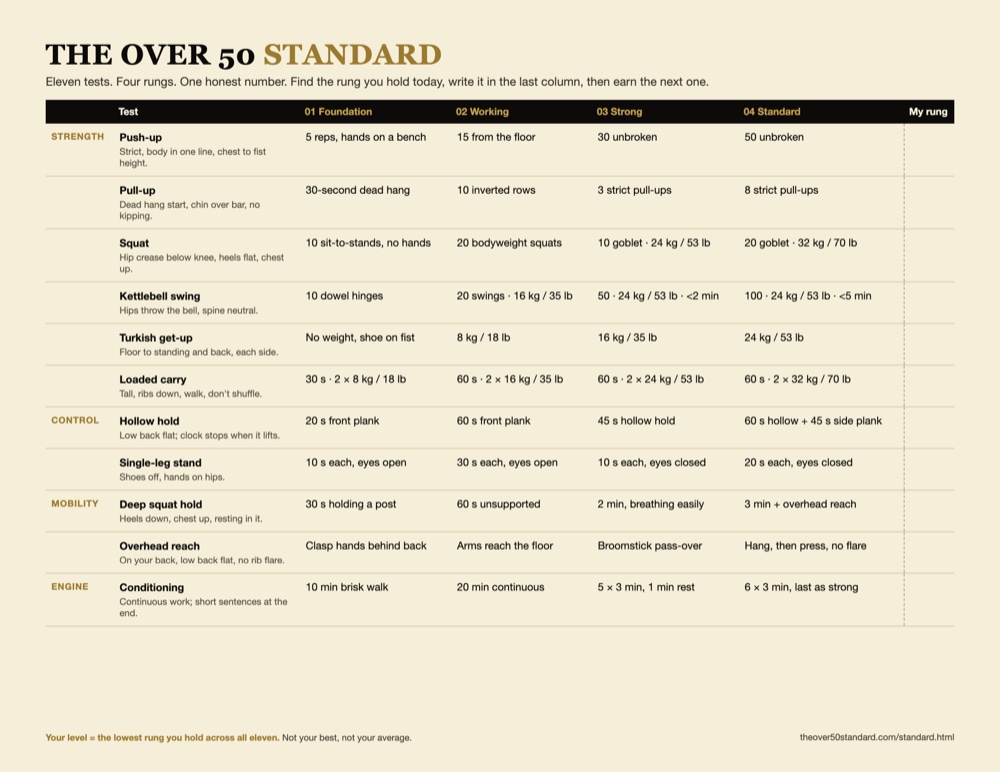
Of the eleven tests in this standard, the single-leg stand costs nothing, takes ten seconds, and improves faster than anything else on the list. It is also the one most men score far worse on than they expect.
Test it honestly first
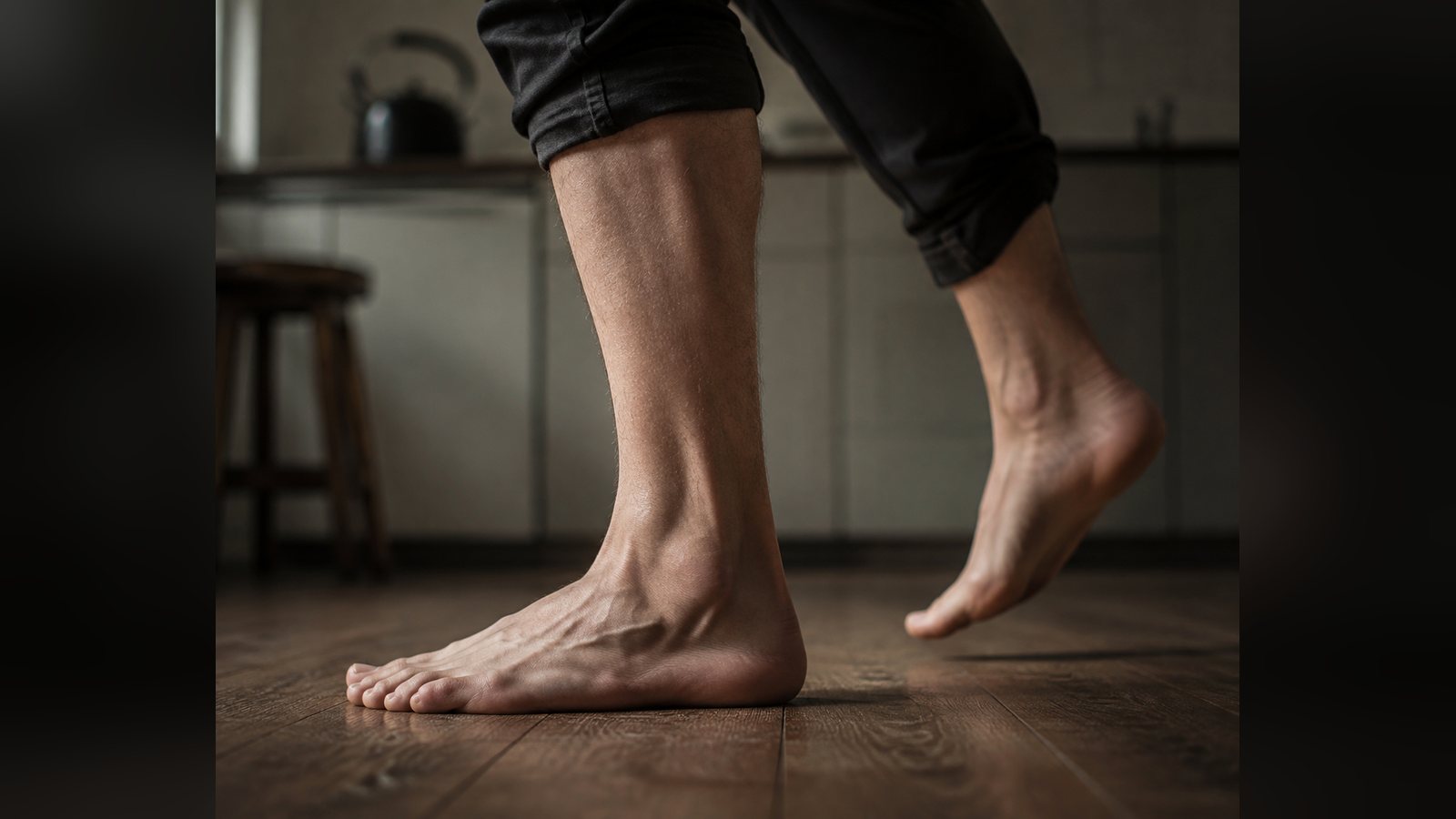
Shoes off, on a hard floor. Hands on hips. Lift one foot off the ground and do not rest it against your standing leg. The clock stops when the foot touches down or a hand comes off a hip.
Two things void the result. Testing in shoes, because any cushioning or heel does a share of the balancing for you. And letting a toe brush the floor to steady yourself, which ends the rep whether you meant it to or not. Stand near a wall you can catch, and do not use it.
Ten seconds a side is the Foundation rung. Thirty seconds a side is Working. Ten seconds with your eyes closed is Strong, and twenty with eyes closed is the Standard, which is genuinely uncommon.
Why eyes closed is a different test
Balance runs on three inputs: what you see, what your inner ear reports, and what your feet and ankles feel. With your eyes open, vision carries most of the load and covers for the other two.
Close your eyes and vision leaves the room. Whatever is left is the part that actually degrades with age and the part worth training. Expect the number to collapse the first time you try it. It comes back fast.
The two minutes a day that fix it
Thirty seconds a side, eyes open, twice a day. While the kettle boils, while you brush your teeth, while you wait for something. That is the whole programme for most people and it works in weeks rather than months.
When thirty seconds a side is comfortable, close your eyes and start over from wherever the number lands. When that gets comfortable, do it on a folded towel or a cushion.
Train the feet, not just the leg
The foot is doing more of this than the leg is. Bare feet on an uneven surface, and a few minutes with a massage ball under the arch, do more than most balance drills.
An ankle that will not move is also an ankle that cannot correct. If your knee will not travel past your toes with the heel down, that stiffness is part of why the clock stops early, and ten minutes of daily ankle work moves both numbers at once.
Why this one is worth taking seriously
It is the cheapest thing on the list to train and the one that most directly touches how well the next twenty years go. Nothing else here takes two minutes a day and moves in a month.
If your number came back under thirty seconds with your eyes open, start today, whatever else you decide to do about the other ten tests.