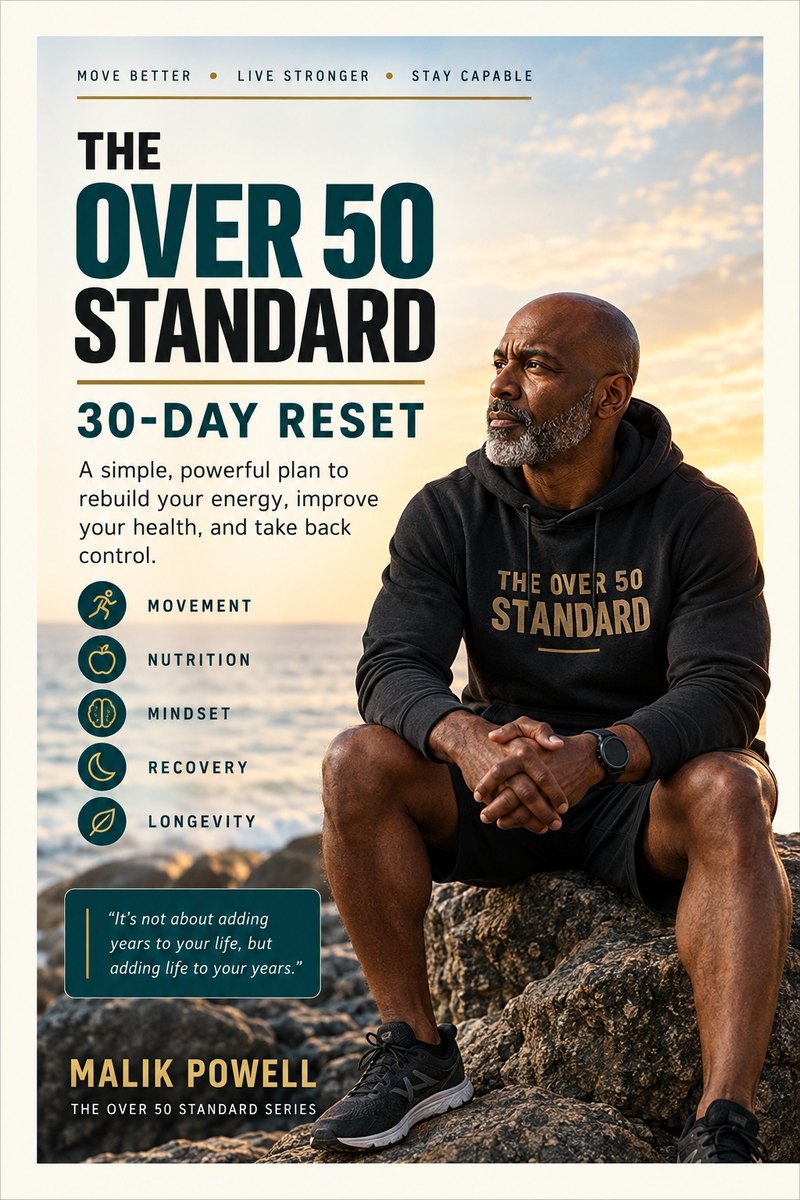
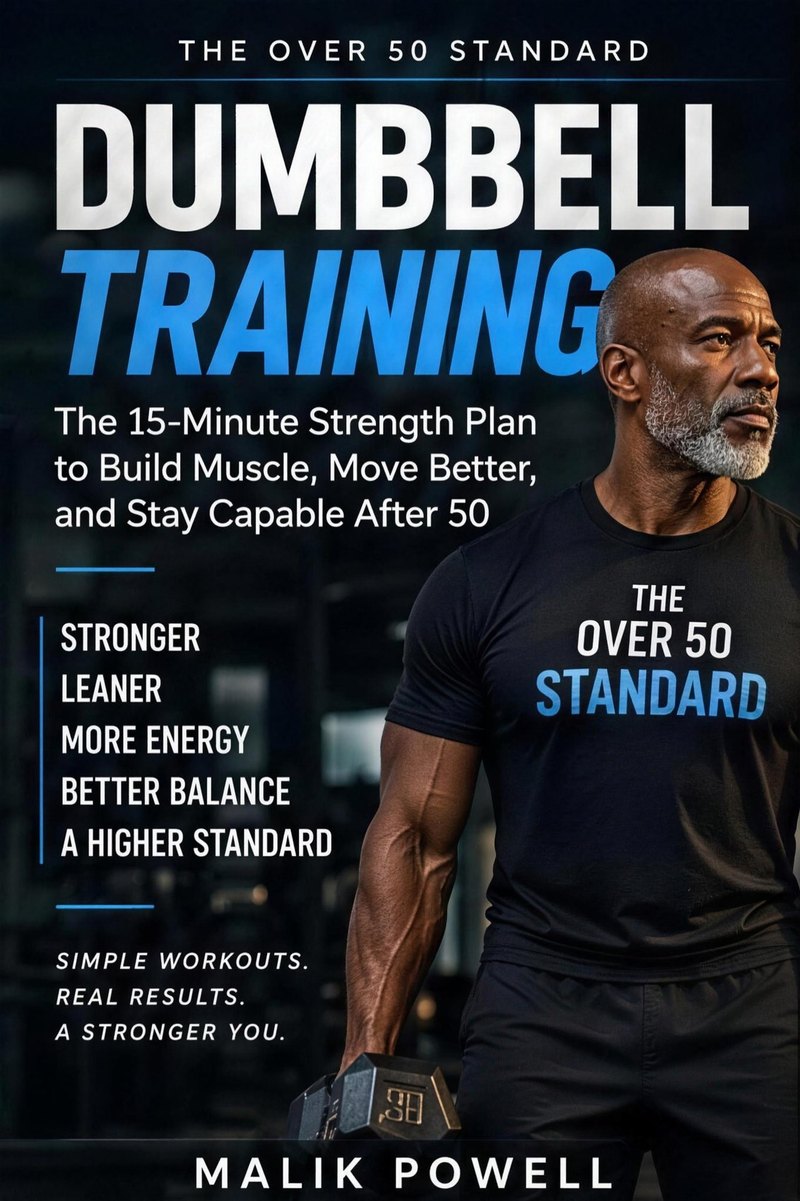
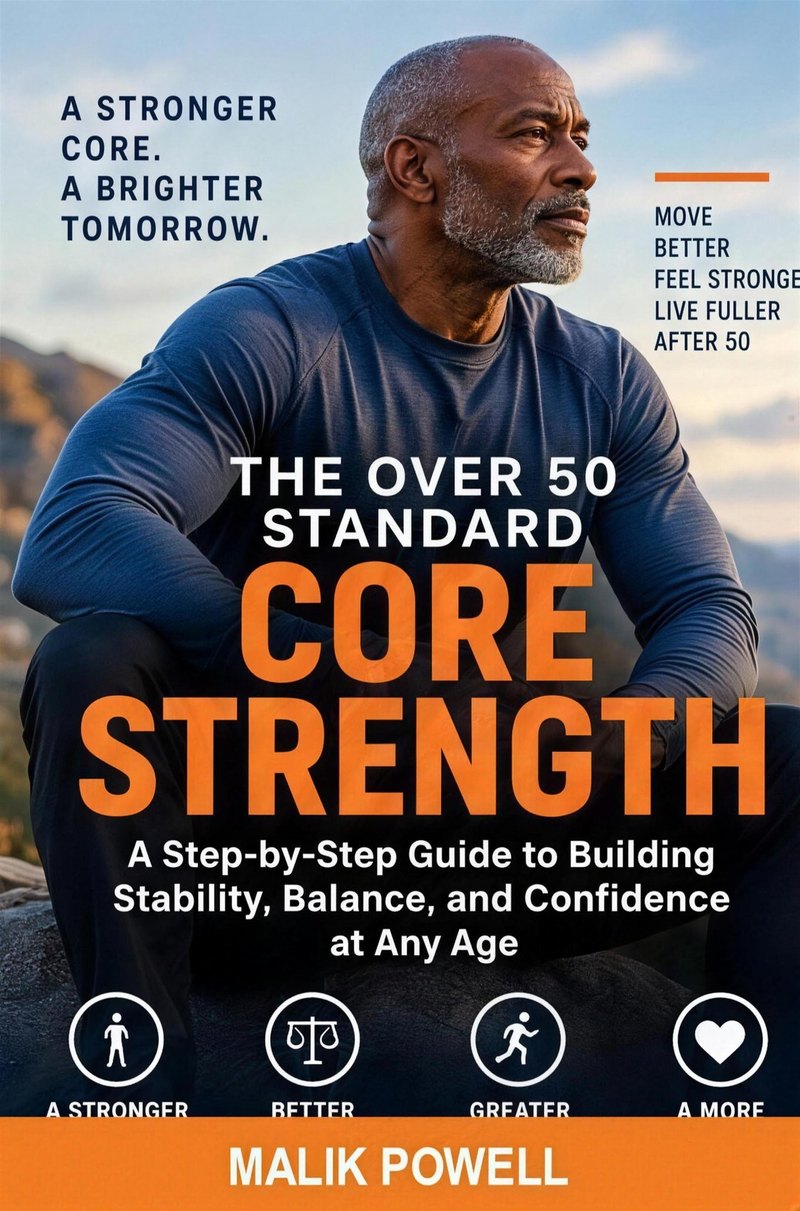
Books / No. 07
Train for the life you want to keep living.
Functional strength is strength you can use: rising from a low chair, carrying groceries, climbing stairs, lifting a suitcase and catching your balance. This book trains the movements life asks of you, and keeps the brain-body connection in honest proportion.
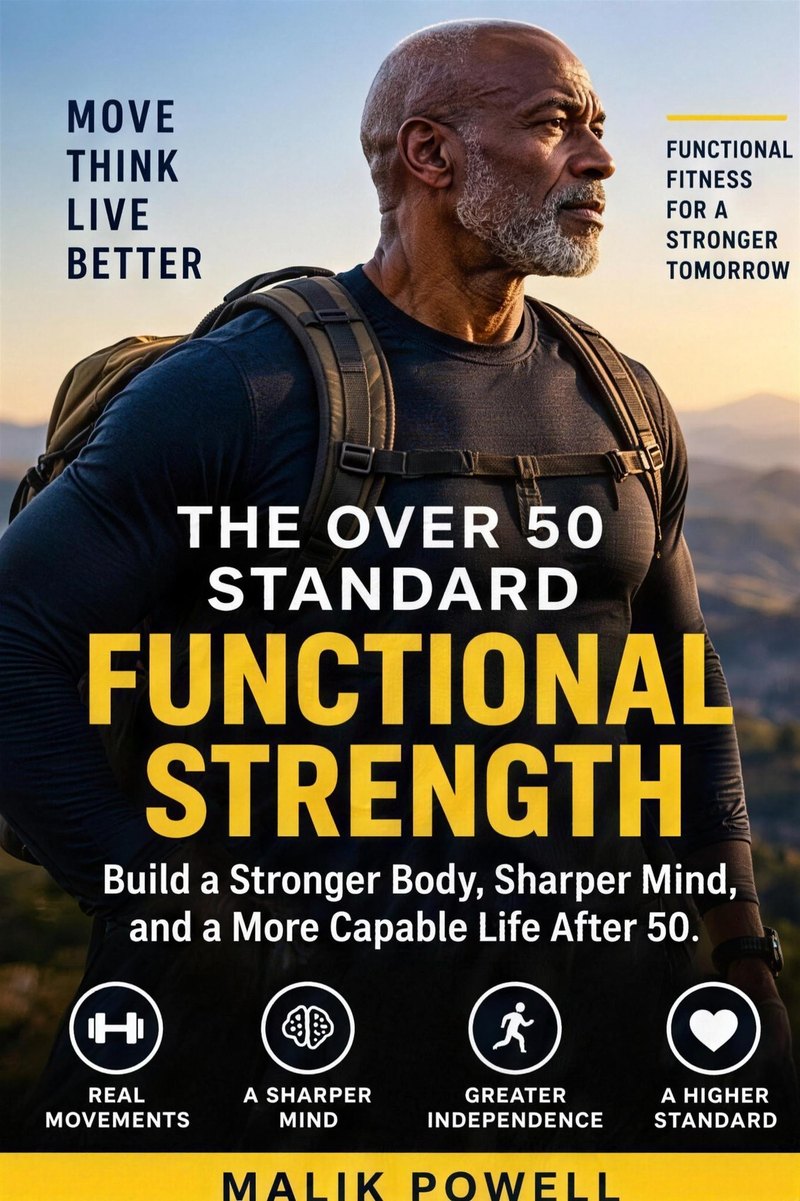
$12
New · 21 pages · PDF · by Malik Powell
- What strength training can support for the brain, and what it cannot promise
- Seven movement patterns with everyday examples and starter options
- Three full-body workouts and simple progression rules
- A five-step warm-up, balance practice and clear red flags
- Nutrition, recovery, sleep and stress without the slogans
- A 10-minute minimum for busy weeks and a first-two-weeks plan
Buy the PDF, $12 All eight books
Instant PDF download through Payhip, paid securely by card. Launch offer: the first hundred readers get it at half price with code FUNCTION50 at checkout.
What is in it
21 pages, in the order you need them.
- 01A stronger you at any ageStrength you can use, and the promise kept in proportion
- 02The strength-powered brainWhat movement can support, and what it cannot promise
- 03The foundationsSeven patterns, everyday examples and starter options
- 04Movement patterns for real lifeSquat, hinge, push and pull, carry, step and balance
- 05The workout planThree full-body workouts and how to progress them
- 06Balance, mobility and injury preventionA five-step warm-up and safe balance practice
- 07Nutrition, recovery and consistencyFood, sleep, stress and the 10-minute minimum
- 08Putting it all togetherTraining markers, life markers and your first two weeks
A page from it
How it reads.
From Chapter One
Research has linked regular physical activity with benefits in mood, sleep, vascular health, and several measures of cognition.
Those are meaningful reasons to train. They are not the same as claiming that lifting weights prevents Alzheimer's disease, grows a specific brain region on command, or cures memory loss.
Functional Strength, Chapter OneHonestly
Who this is for.
You care less about gym numbers and more about stairs, groceries, luggage and getting off the floor
You are returning after years of inactivity and want the movements in the right order
You want honest information about exercise and the brain, without miracle promises
And who it is not for.
You have new neurologic symptoms, unexplained fainting or chest pain. Those need a clinician, not a workout
You want a cure for memory problems. The book is clear that no workout can promise that
Useful, not required
Kit that pairs with this book.
Links go to Amazon and a purchase through one pays me a small commission at no extra cost to you. It does not change what gets recommended.
Where this shows up
The free pages behind it.
Before you ask
Four questions.
Will this make me sharper mentally?
Regular activity is linked with better mood, sleep and several measures of cognition, and the book explains why. It does not promise sharper memory or protection from dementia, and it says a new memory change needs a doctor.
How many days a week?
Two or three full-body sessions, separated by recovery days. If you are brand new, start with two.
What equipment do I need?
A chair, a countertop, light dumbbells and something to carry. A band helps for rows.
Who wrote it?
Malik Powell, who writes The Over 50 Standard. The book states that he is not a physician, physical therapist, dietitian or certified coach.
The list
Get told when the next book lands.
Put your address in and you get one email when a new book is ready. Nothing else the list is ever used for.