Books / No. 08
A strong core is not about holding your breath.
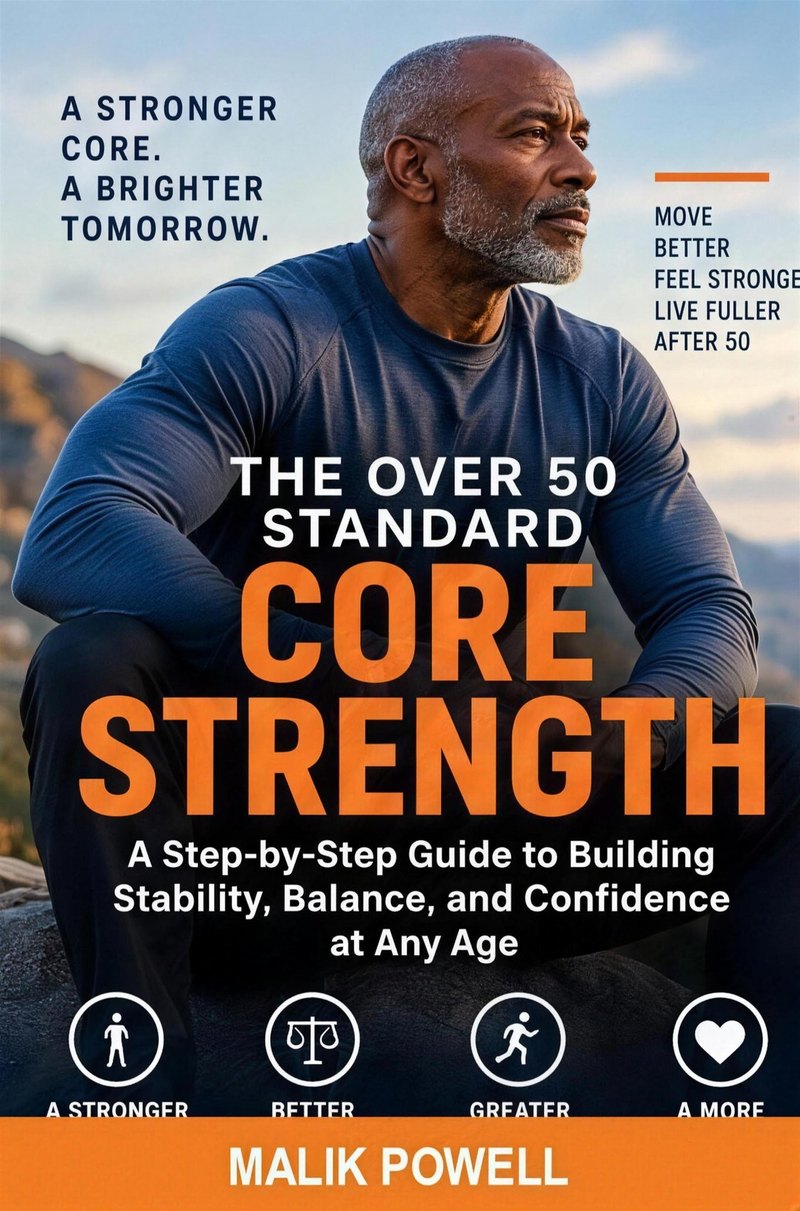
Core strength is not about visible abs. It is about a stable center that helps you breathe, brace, balance, lift, carry, turn, and get up from the floor with more control. Stability before strength. Consistency before intensity.
$12
New · 20 pages · PDF · by Malik Powell
- The two rules: stability before strength, consistency before intensity
- The foundations: breathing, bracing without clenching, and moving with control
- A five-part starting assessment you can do at home
- An exercise library of nine moves, each with a starting dose
- Three 10-20 minute core workouts and a simple weekly rhythm
- Real-life core: groceries, stairs, uneven ground and getting off the floor
Buy the PDF, $12 All eight books
Instant PDF download through Payhip, paid securely by card. Launch offer: the first hundred readers get it at half price with code CORE50 at checkout.
What is in it
20 pages, in the order you need them.
- 01Who this playbook is forWhat core strength really means, and the two rules
- 02Why core strength matters after 50A pressure-and-control system, and what changes with age
- 03The foundationsBreathe 360 degrees, brace without clenching, move with control
- 04Your starting assessmentFive checks, and why your baseline is not a grade
- 05Exercise libraryNine moves from 90/90 breathing to farmer carries
- 0610-20 minute core workoutsCore basics, core strength, core and balance
- 07Balance, stability and real-life movementGroceries, stairs, the floor, uneven ground and chores
- 08Setbacks and your stronger tomorrowWarning signs, busy weeks, and the daily minimum
A page from it
How it reads.
From Chapter Three
A brace is a moderate whole-trunk tension: not sucking in, and not holding your breath.
Think of preparing for a gentle nudge while still being able to breathe and speak.
Core Strength, Chapter ThreeHonestly
Who this is for.
Getting up from the floor or out of bed takes more planning than it used to
You reach for the rail sooner and want steadier balance on stairs and uneven ground
You want short sessions at home with little or no equipment
And who it is not for.
You have persistent back pain, recent surgery, or unexplained weakness, numbness or dizziness and have not been assessed. Do that first
You want a six-pack program. This is about control, balance and confidence
Useful, not required
Kit that pairs with this book.
Links go to Amazon and a purchase through one pays me a small commission at no extra cost to you. It does not change what gets recommended.
Where this shows up
The free pages behind it.
Before you ask
Four questions.
Do I need equipment?
No for most of it. A mat and a sturdy chair cover the foundations, a band is needed for the Pallof press, and something to carry for farmer carries.
Will core work fix my back pain?
It can be one useful part of a broader plan, but the book is clear that back pain has many causes and persistent symptoms need a medical evaluation.
How long are the workouts?
Ten to twenty minutes. Two rounds of four or five moves, three days a week, with short breathing and balance practice on other days.
Who wrote it?
Malik Powell, who writes The Over 50 Standard. The book states that he is not a licensed clinician, physical therapist or certified personal trainer.
The list
Get told when the next book lands.
Put your address in and you get one email when a new book is ready. Nothing else the list is ever used for.